

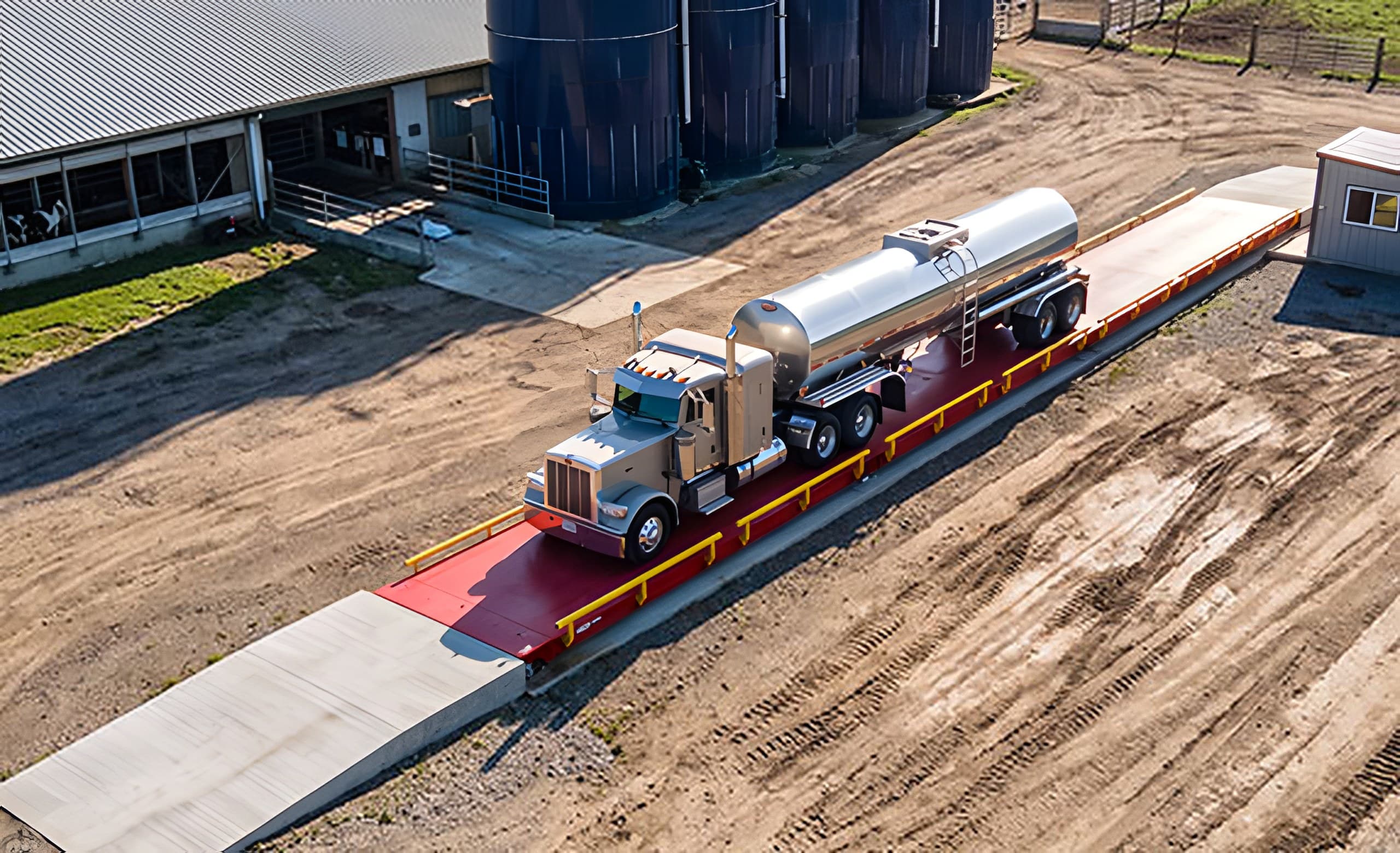
The scale is where the money changes hands.
We sell and install B-TEK, Emery Winslow, Cardinal, and Active Scale truck scales — and service and calibrate almost any make.
A truck scale is a decades-long purchase.
Make it the right one — matched to your traffic count, traffic type, loading method, and site.
65+
Years in the scale business
Electronic Truck Scales
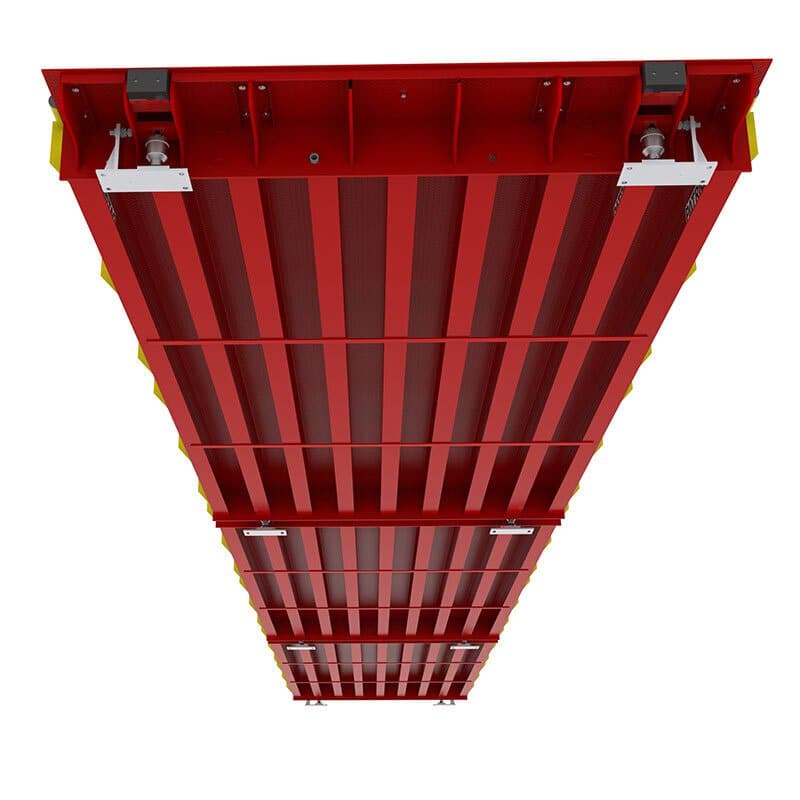
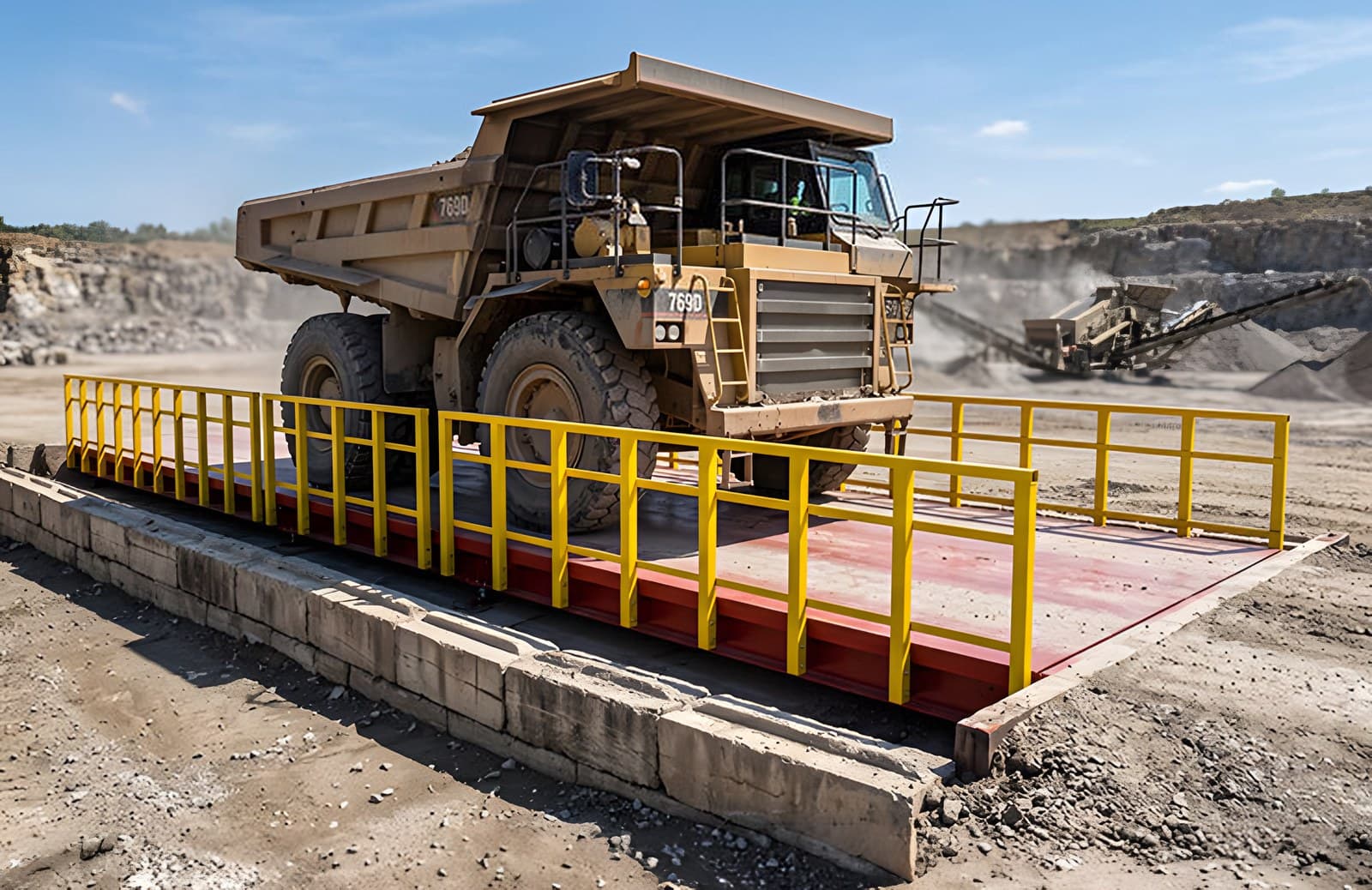
The industry standard: a steel or concrete weighbridge on eight or more load cells, wired to an indicator in your scale house. It ties straight into ticketing software and printers, so the weight becomes a ticket without anyone retyping it. The same system can run remote displays, gates, and traffic lights.
A single-deck scale weighs the whole vehicle at once. A multi-deck scale builds the weighbridge from separate weighing platforms, so the system can weigh each axle group as well as the total — and so the deck can be made long enough for whatever you actually put on it.
- Pit-type, above-ground, and portable configurations
- Single-deck or multi-deck, sized to the longest vehicle you weigh
- NTEP-certified for legal-for-trade weighing
Digital vs. Analog Load Cells
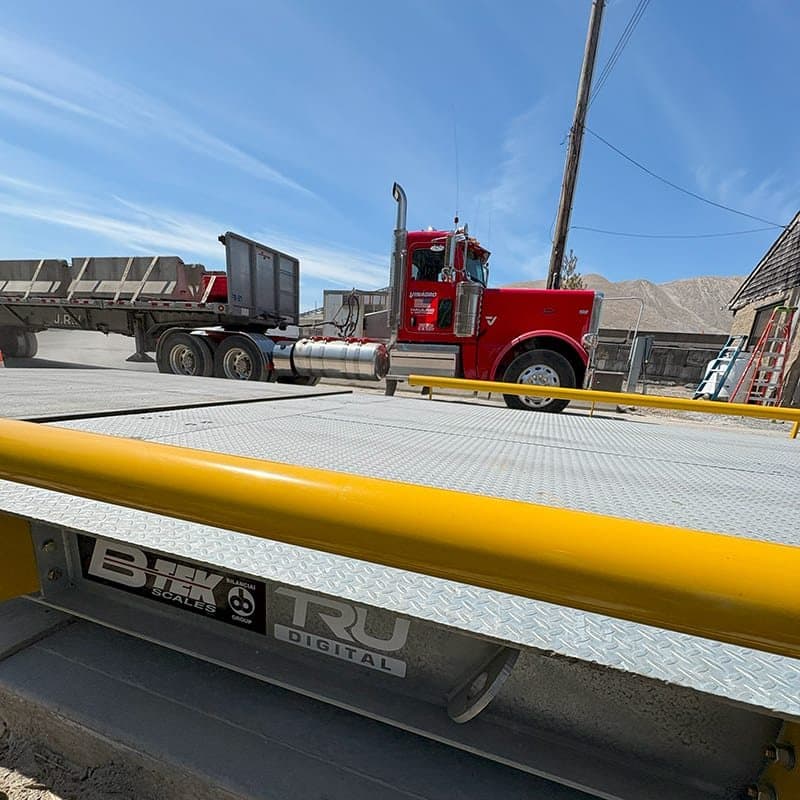
An analog load cell sends a small millivolt signal to a junction box, where the signals from all the cells are summed and passed to the indicator. It is proven, simple, and cheaper to replace one cell at a time.
A digital cell converts the signal at the cell itself, so the indicator can talk to each one individually. The system names the cell that has drifted or failed instead of sending a technician hunting for it with a meter, and some will keep weighing around a dead cell until we get there. Digital costs more per cell and buys the time back in diagnostics. On a high-traffic scale where downtime costs money we usually recommend it; on a quieter one, analog keeps the price down and works fine.
- Analog: lower cost, proven, junction-box summing
- Digital: per-cell diagnostics, faster troubleshooting, less downtime
- Both in hermetically sealed stainless steel, IP68/IP69K
- A cost-versus-uptime decision, not a right-or-wrong one — we service both
Hydrostatic Truck Scales
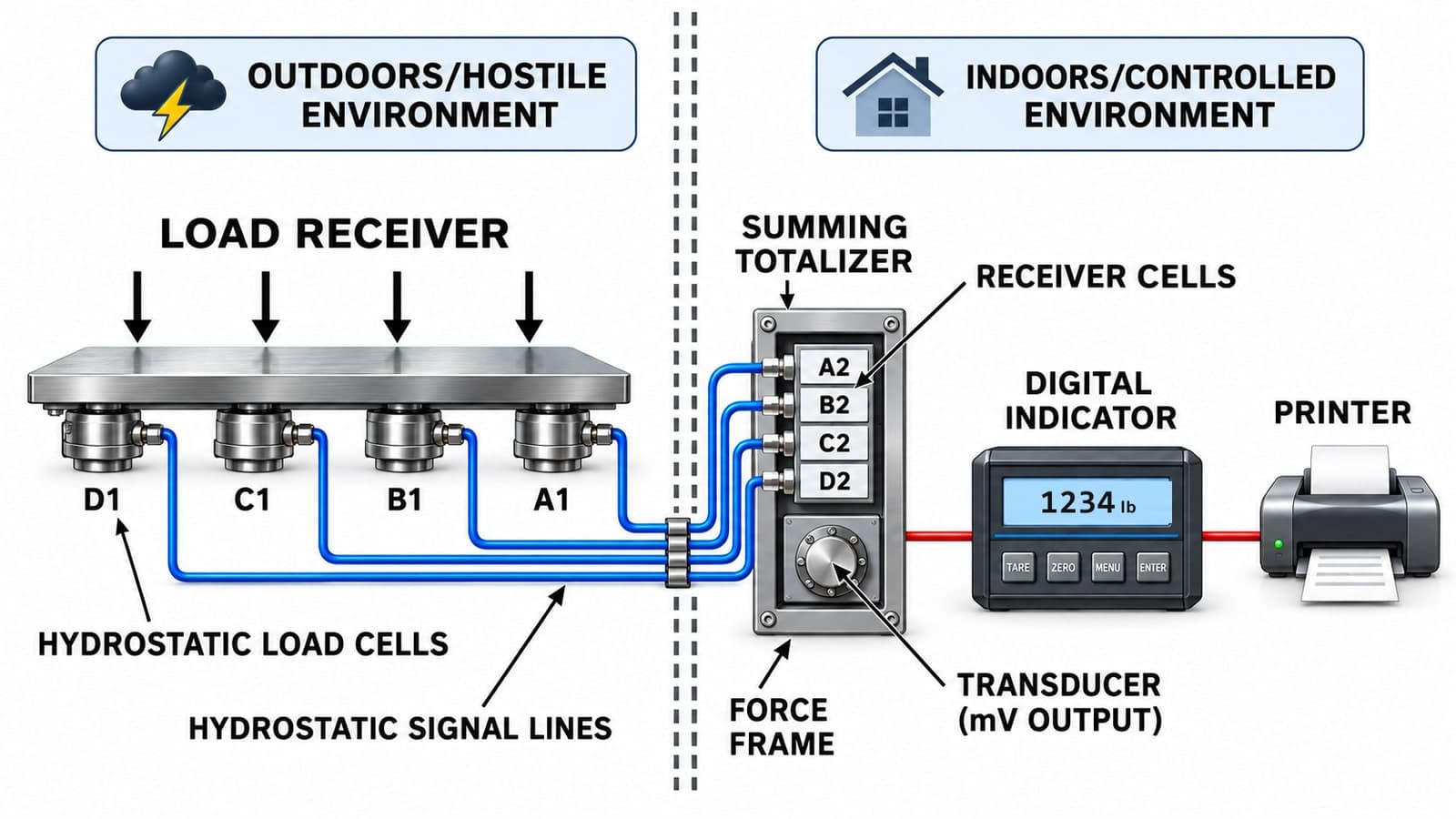
One truck scale design puts no electronics under the deck at all. The load cells are sealed hydraulic sensing elements; weight travels as hydraulic pressure through copper lines to a totalizer in a clean, protected spot, where it becomes one signal for the indicator.
Nothing in the pit can be killed by lightning, a power surge, flooding, high-pressure washdown, rodents, or corrosive runoff. If your site floods, if you wash down daily, or if you've already replaced a set of load cells after a strike, this is the one we'll show you first.
- No electronics beneath the weighbridge
- Nothing under the deck for water, lightning, or surges to damage
- Suits waste transfer, quarries, chemical plants, and flood-prone sites
- Steel or concrete deck, pit or pitless installation
Foundation, Installation, and Calibration
The foundation is often a third of the project, so we look at soil, drainage, approaches, and traffic pattern before we quote one. Above-ground on piers or a slab is the default now — cheaper to build, easier to clean under and service. Pits sit flush with grade where space is tight, but you pay for excavation and drainage.
If you sell by weight, the scale has to be calibrated on site. We do that with certified test weights and test trucks, file the placed-in-service paperwork, and offer Periodic Maintenance Agreements and scheduled calibration.
- Site review before we quote: soil, drainage, and approaches
- Above-ground foundations cost less; pits save space
- On-site calibration with certified test weights and test trucks
- Placed-in-service paperwork handled in Pennsylvania and Maryland
- Service and scheduled recalibration from our Lancaster shop
Beyond the Weighbridge
Not every job needs a full-length scale. Three other ways of weighing a vehicle come up often enough to be worth knowing about, and we sell and service all of them.
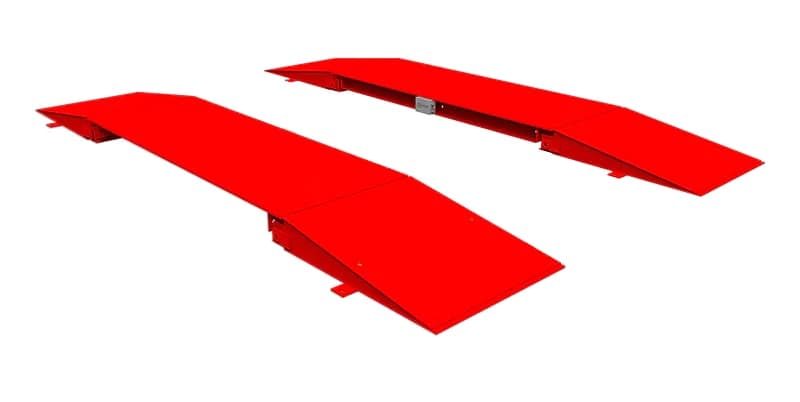
- Axle and wheel weighers
- Weigh one axle or axle group at a time, or slide portable pads under each tire. Lower cost, smaller footprint, and portable between sites. Not legal for trade.
- Weigh-in-motion
- Trucks roll across at low speed and each axle is captured without stopping. Built for screening and throughput rather than billing.
- Unattended ticketing
- The driver badges in or enters a PIN, the system captures the weight and prints or transmits the ticket, and the gate releases the truck. Runs around the clock with nobody in the scale house.
Common questions
How much does a truck scale cost installed?
Most full-length truck scale projects land between $60,000 and $150,000 installed, depending on length, deck type, and foundation work. The foundation is often a third of the total, which is why we quote only after a site visit. Axle scales run far less if you don't need legal-for-trade weights.
What's the difference between a concrete deck and a steel deck truck scale?
Steel decks install faster, sit lower, and can be moved later. Concrete decks resist corrosion, grip better in wet or icy weather, and generally need less maintenance over the scale's life. For a permanent, high-traffic installation, concrete is usually the better long-term buy.
Do I need an NTEP-certified truck scale?
Only if you buy or sell by weight — then yes, the scale must be NTEP-certified and placed in service through your state weights-and-measures office. If you only check loads against DOT axle limits or track internal weights, a non-trade axle scale is fine and costs much less. We handle the placed-in-service paperwork for Pennsylvania and Maryland.
How often does a truck scale need to be calibrated?
Pennsylvania and Maryland require at least annual testing for commercial scales, and most high-traffic operations calibrate quarterly or twice a year. We perform on-site calibration with certified test weights and test trucks, and we'll put your scale on a schedule so an inspection never catches you off guard.