
RAIL & TRACK SCALES
Railroad Track Scales, Installed and Certified
Weigh loaded railcars accurately enough to bill from — and prove the number at inspection.
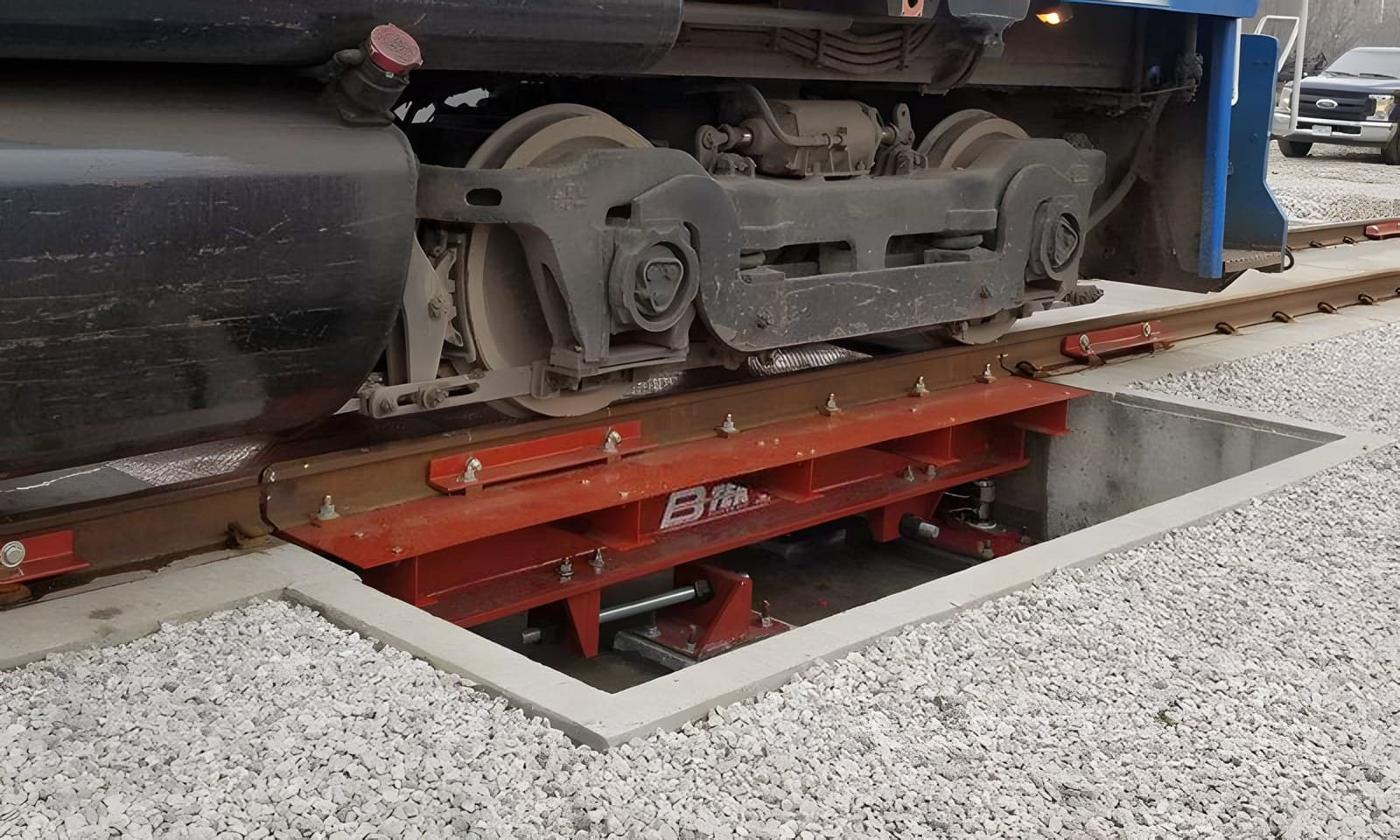
If you load or receive product by rail, the track scale is where the money changes hands. A single car can carry over 100 tons, so a small error per car adds up fast across a season of shipments.
The design matters less than the site. Your track, your soil, your car volume, and whether the weight has to survive a billing dispute decide what belongs there. Rail work is held to Cooper E-80 loading, AREMA design specs, and NTEP Class IIIL for legal-for-trade weighing, and we will tell you which construction fits before you buy.
We sell and install Rice Lake, Emery Winslow, B-TEK, and Cardinal rail scales — and service almost any make.
Static Rail Weighing
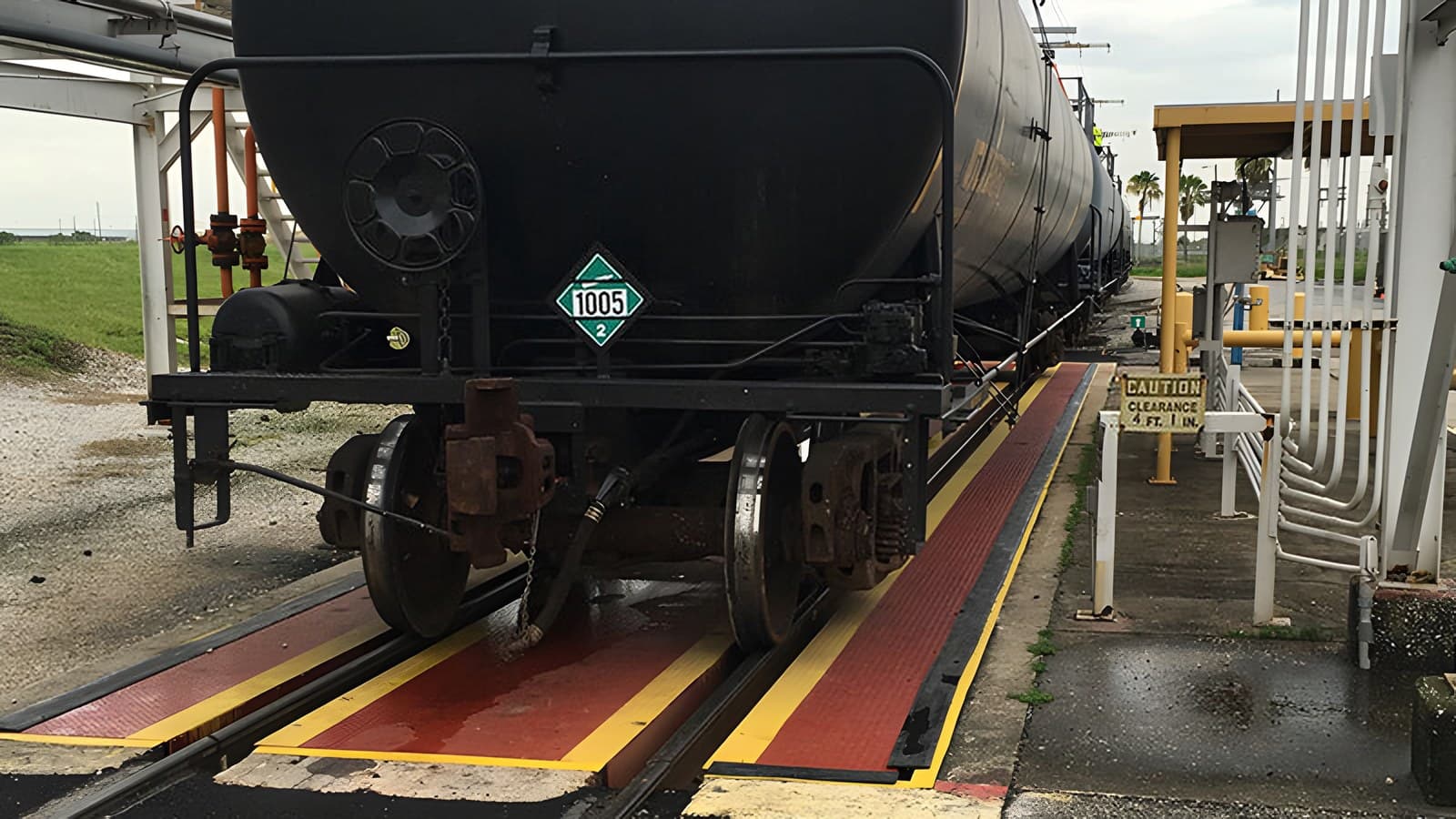
Most track scales are static: the car is spotted on the weighbridge, comes to rest, and is weighed one at a time. Static weighing is the standard for legal-for-trade rail transactions because it delivers the highest accuracy — NTEP Class IIIL — and holds up in a billing dispute.
Coupled-in-motion is the other route: the train rolls across at low speed and each car is weighed without uncoupling. It saves switching time on unit trains but trades accuracy and needs speed control and more instrumentation. For a plant shipping a few cars a day, static is simpler and more defensible. If your volume justifies it, we will say so.
- Static: car at rest, highest accuracy, legal for trade
- Coupled-in-motion: weigh cars without uncoupling, faster for unit trains
- Both must meet Cooper E-80 loading and AREMA design specifications
- Method matched to your car volume and billing needs
Pit, Pitless, and Direct-Rail Construction
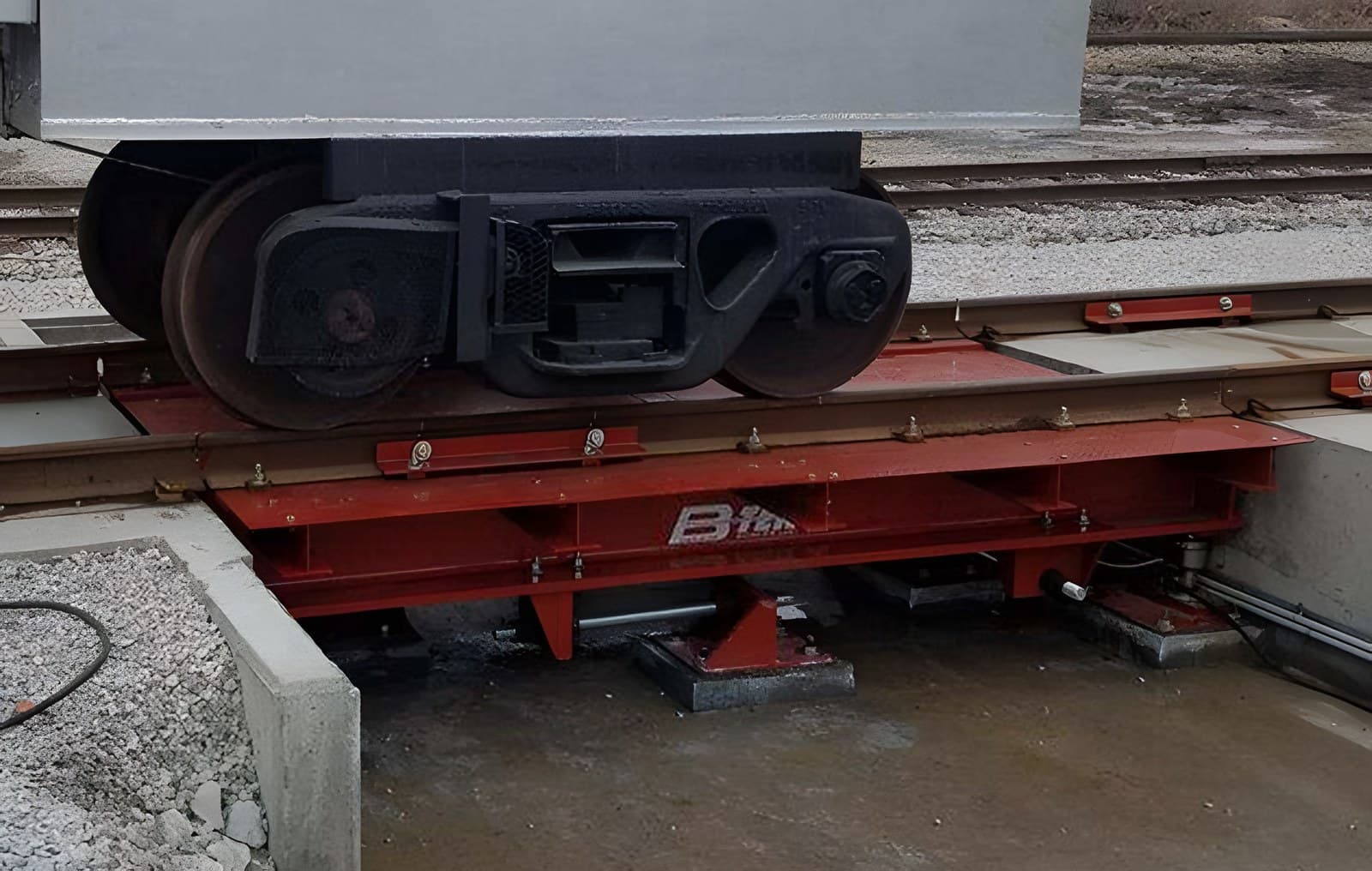
Three constructions, three trade-offs. A pit-type scale sits in a concrete pit with the weighbridge flush to grade — costlier to build, but it protects the load cells, allows inspection access from below, and suits a combination deck where trucks cross. A low-profile pitless scale sits on a shallow foundation instead: simpler site work, easier drainage, lower cost. Most new rail-only installations go this way.
Direct-rail is the third: weighing modules under your existing rail, no separate deck, at a fraction of a full weighbridge's cost. It's a practical answer where you need reliable process weights, not legal-for-trade. We look at your track, soil, and use case first.
- Pit-type: below-deck access, supports rail and truck combination decks
- Low-profile pitless: shallow foundation, lower cost, faster install
- Direct-rail: modules under existing rail, lowest cost, process weighing
- All work coordinated with your railroad and civil contractor
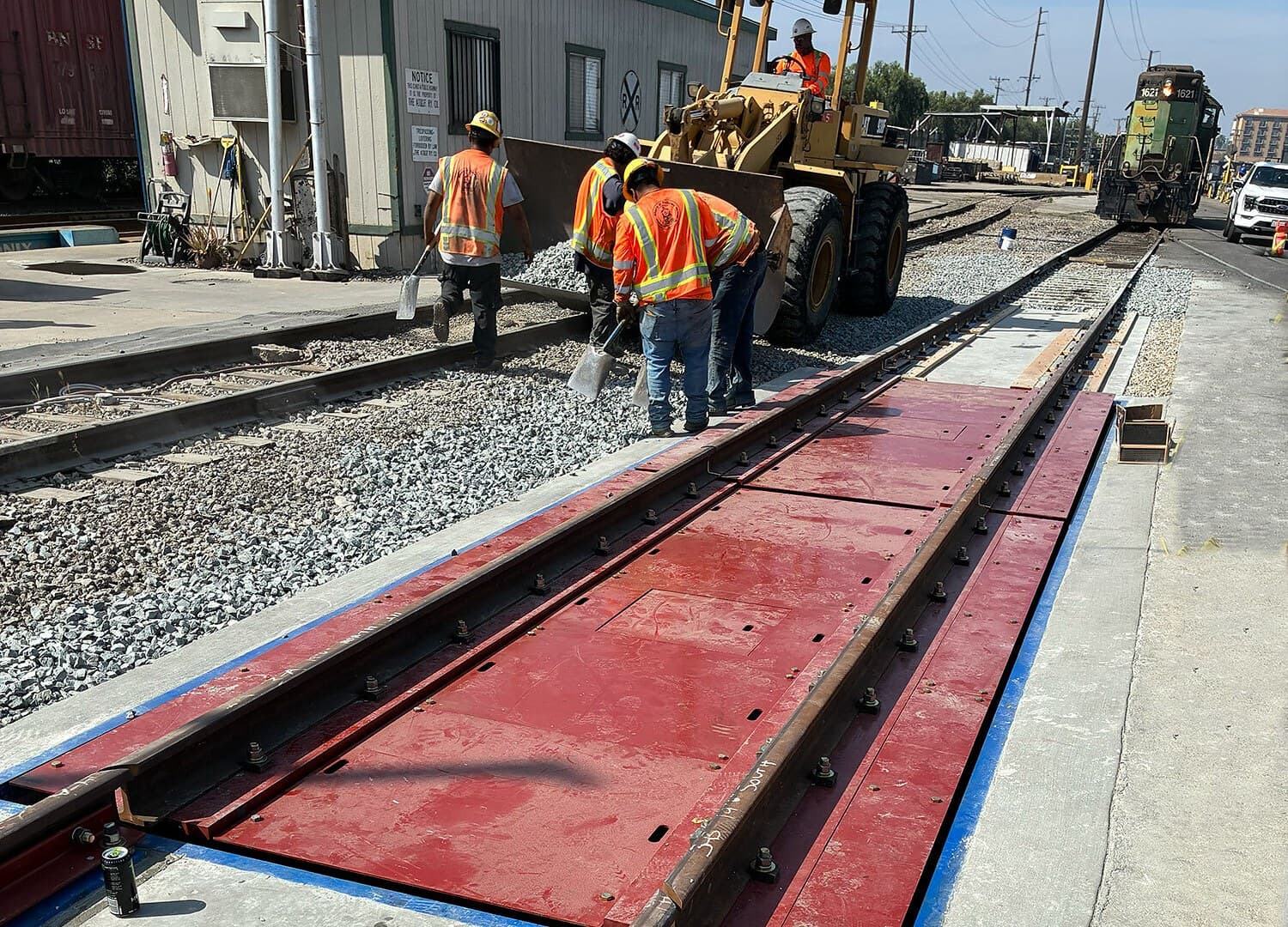
Rail Scale Service and Certification
A rail scale is only worth what its last calibration proves, and testing one takes serious metal — certified test weights or a rail scale test car across each weighbridge section to verify accuracy under load. We schedule the test, document as-found and as-left results against NIST Handbook 44 tolerances, and handle the adjustments, so the certificate stands up to a state inspection or a customer audit.
We service what we certify: load cell replacement, weighbridge repair, junction box and instrumentation troubleshooting, and Periodic Maintenance Agreements that catch drift before it costs you a shipment. If the scale is down, a car can't bill — we treat those calls accordingly.
- Certified test weights or a test car, traceable to NIST
- As-found and as-left results documented on every section
- State weights-and-measures inspection preparation and support
- Load cell, weighbridge, and instrumentation repair
- Periodic Maintenance Agreements with scheduled test intervals
Common questions
How much does a railroad track scale cost?
It depends heavily on construction type and site work. A direct-rail system on existing track is the least expensive route; a full pit-type legal-for-trade scale with concrete work costs several times more. A low-profile pitless scale usually lands in between. We quote after a site visit so the number includes foundation, installation, and calibration — not just the steel.
Do I need a pit for a rail scale?
Usually not anymore. Low-profile pitless designs sit on a shallow foundation and cost less to build. A pit still makes sense for rail/truck combination scales and sites where a flush deck is required. We'll recommend based on your track, drainage, and traffic.
How often does a railroad scale need to be calibrated?
Legal-for-trade rail scales must pass state weights-and-measures inspection, and most owners test at least annually — more often under heavy use or where billing disputes are costly. We set a test schedule in your Periodic Maintenance Agreement and perform calibrations with certified test weights, documented in writing.
Can a rail scale also weigh trucks?
Yes. Combination scales put rail and a drivable deck on one weighbridge, so a single scale serves both traffic types. It's a pit-type installation, so plan for concrete work, but it can eliminate the cost of a second scale.