

LAB WEIGHING EQUIPMENT
Laboratory Balances
Balances matched to what you actually weigh, calibrated on the bench where they sit.

A laboratory balance is only as good as the numbers it gives you. Readability, capacity, and the environment it sits in decide whether the reading holds up, and whether you can defend it to an auditor or a customer.
We calibrate on site, at your bench, in your environment — that is the reading you can defend. Tell us what you weigh, how small a change you need to see, and what your quality system requires, and we will match the balance to the job instead of selling you resolution you will never use.
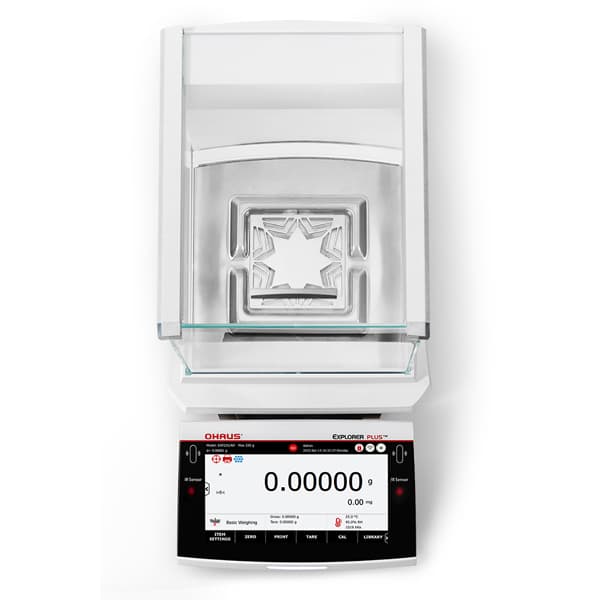
We sell Ohaus, Adam Equipment, and Intelligent Weighing Technology balances — and service and calibrate almost any make.
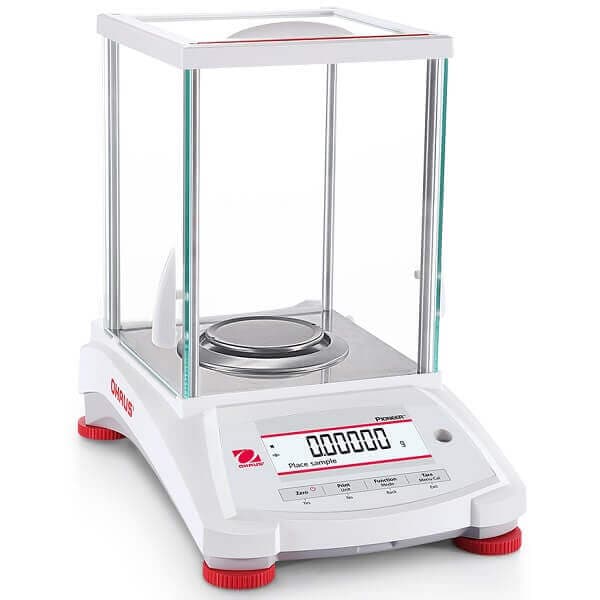
Matched to What You Weigh
Start with two numbers: the heaviest thing you will put on the pan, and the smallest change you need to see. Capacity and readability trade off, so buy the readability your process requires and size capacity for sample plus container. A common mistake is forgetting the vessel's tare weight.
Finer resolution means air currents, vibration, and temperature drift show up in the reading — which is what draft shields, a stable bench, and a documented calibration program are for. External-cal balances cost less but need a technician and a certified weight to adjust; internal-cal models adjust themselves when temperature drifts, worth it for analytical and regulated work.
- Heaviest load on the pan, and the smallest change that matters
- Capacity sized for sample plus container, with headroom
- Bench stability, drafts, vibration, and temperature where it will sit
- Internal or external calibration, based on how the balance is used
- What your quality system requires you to document
Calibration and Service
Our lab is A2LA-accredited to ISO/IEC 17025, and our technicians calibrate on site, where the balance actually gets used. You get a certificate with traceable measurement uncertainty, and any repair or adjustment happens on the same visit. We calibrate balances from almost any manufacturer, not just the ones we sell.
Internal adjustment is not calibration. A balance that corrects itself when the temperature drifts is still due for periodic calibration with certified weights. USP General Chapters 41 and 1251 and ISO-based quality systems call for documented, traceable calibration with stated uncertainty. We will set an interval with you and keep it from lapsing.
- On-site calibration across central Pennsylvania and northern Maryland
- A2LA-accredited ISO/IEC 17025 certificates with traceable uncertainty
- Almost any manufacturer's balance, whether or not we sold it
- Repair and adjustment handled on the same visit
- Recurring calibration schedules so nothing lapses
Common questions
What is the difference between a precision balance and an analytical balance?
Readability. Precision balances read to 0.01 g or 0.001 g; analytical balances read to 0.1 mg (0.0001 g) or finer. Analytical balances also need a draft shield and a stable bench because at that resolution, air movement and vibration affect the reading. Buy analytical only if your process actually requires it.
Do I need internal calibration on a lab balance?
For analytical work and busy labs, yes — internal calibration adjusts the balance automatically when temperature drifts, so it is always ready. External-cal models cost less and work fine for less critical weighing. Either way, internal adjustment does not replace periodic calibration with certified, traceable weights — accredited where your quality system calls for it.
How often should a laboratory balance be calibrated?
Most labs calibrate annually at minimum; regulated environments and heavily used balances often go to six months or quarterly. Your quality system and how critical the measurements are should set the interval. Our technicians calibrate on-site and can put your balances on a recurring schedule so nothing lapses.
Can Bitterman calibrate balances we bought somewhere else?
Yes. Our ISO/IEC 17025:2017 accredited lab calibrates lab balances from almost any manufacturer, on-site, throughout central Pennsylvania and northern Maryland. You get an accredited calibration certificate with traceable measurement uncertainty, and if the balance needs repair or adjustment, we handle that on the same visit.