

SYSTEMS & INTEGRATION
Weighing Systems and Integration
Weighing systems are made up of various components, including indicators, controllers, and the connections between your scale and everything downstream. We design weighing systems, not just boxes on a wall.
A scale by itself just shows a number. The value comes from what you do with that number — start a fill, stop a conveyor, print a ticket, log a batch record. That takes the right indicator, the right controller, and someone who knows how to wire it all into your process. That's the work we've been doing since 1961.
Bitterman Scales designs, builds, and supports weighing systems for plants across central Pennsylvania and northern Maryland. We focus our attention on the weighing components of your system, working with your IT, PLC, and Software team (or with 3rd party specialists) to enable your weighing devices to communicate with remote displays, PLCs and computers, or your database software. We can interface with your staff, General Contractor of choice, or we can head up the project. We build with top-tier equipment from the manufacturers we represent.
If you're replacing a tired indicator, automating a manual batching process, or trying to get weight data into your ERP without someone retyping it, start with a phone call. We'll look at what you have, tell you what will work, and quote it plainly.
Load Cells and Weigh Modules
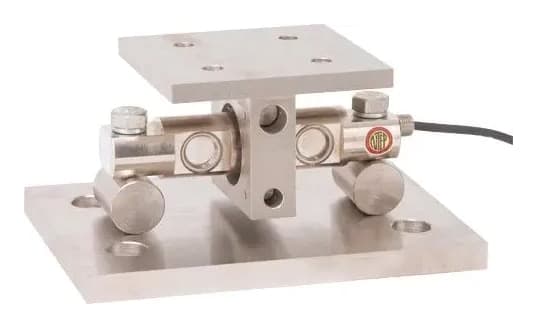
Every system on this page starts in the same place: a structure resting on load cells. A tank scale is a vessel supported on load cells instead of fixed legs or a foundation. A floor scale is a structural steel channel frame on four NTEP-certified shear beam load cells. A feed cart runs three or four load cells or a set of weigh bars under the frame. We focus on the weighing components, from the load cells to the indicator.
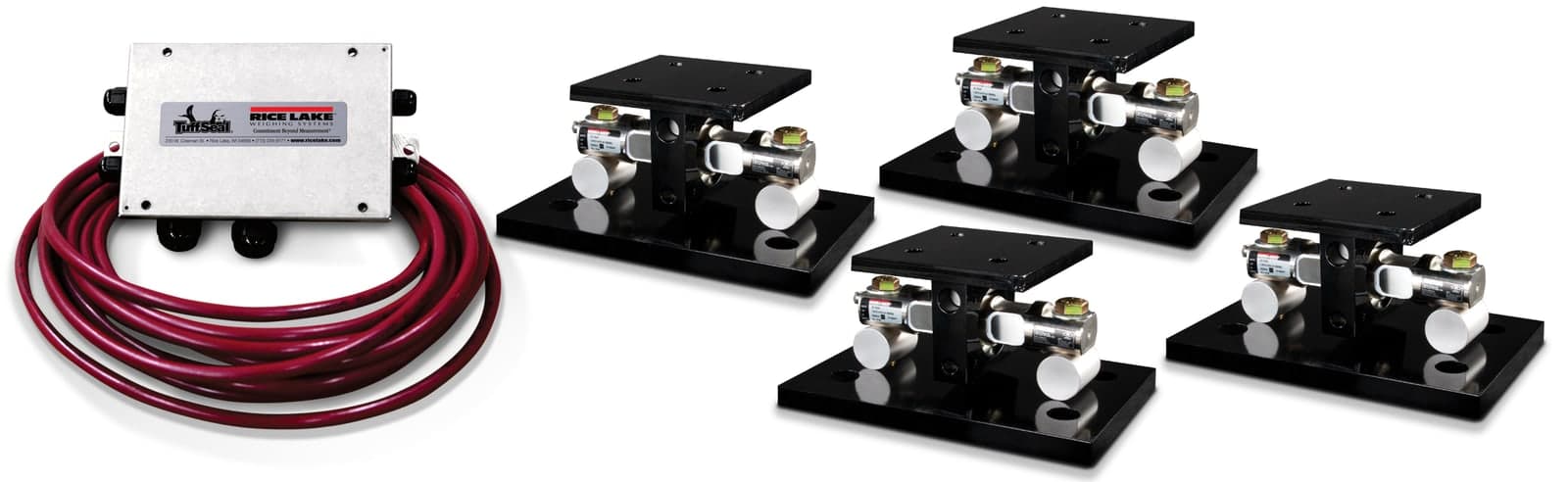
We specify and supply precision load cells for the platform, capacity, and environment. You may not have to buy a new vessel to get a scale — a weigh module kit of load cells, mounting hardware, and a junction box installs under the legs of a tank or hopper you already own and turns it into a scale, and every kit is self-checking: the mount holds the vessel in place while letting the load cell measure freely. An analog cell sends a small millivolt signal to a junction box, where signals from all cells are summed and sent to the indicator; a digital cell converts the signal right at the cell, so the indicator can talk to each cell individually. We stock load cells, cables, junction boxes, and indicators.
- Load cells — specified and supplied for the platform, capacity, and environment
- Weigh modules and mounting — load cells, mounting hardware, and a junction box under an existing tank, hopper, silo, or mixer
- Junction boxes and summing — analog summing at the box, or per-cell digital diagnostics
- Environment and capacity — hermetically sealed stainless (IP68/69K) cells and dust-tight junction boxes
Weight Indicators
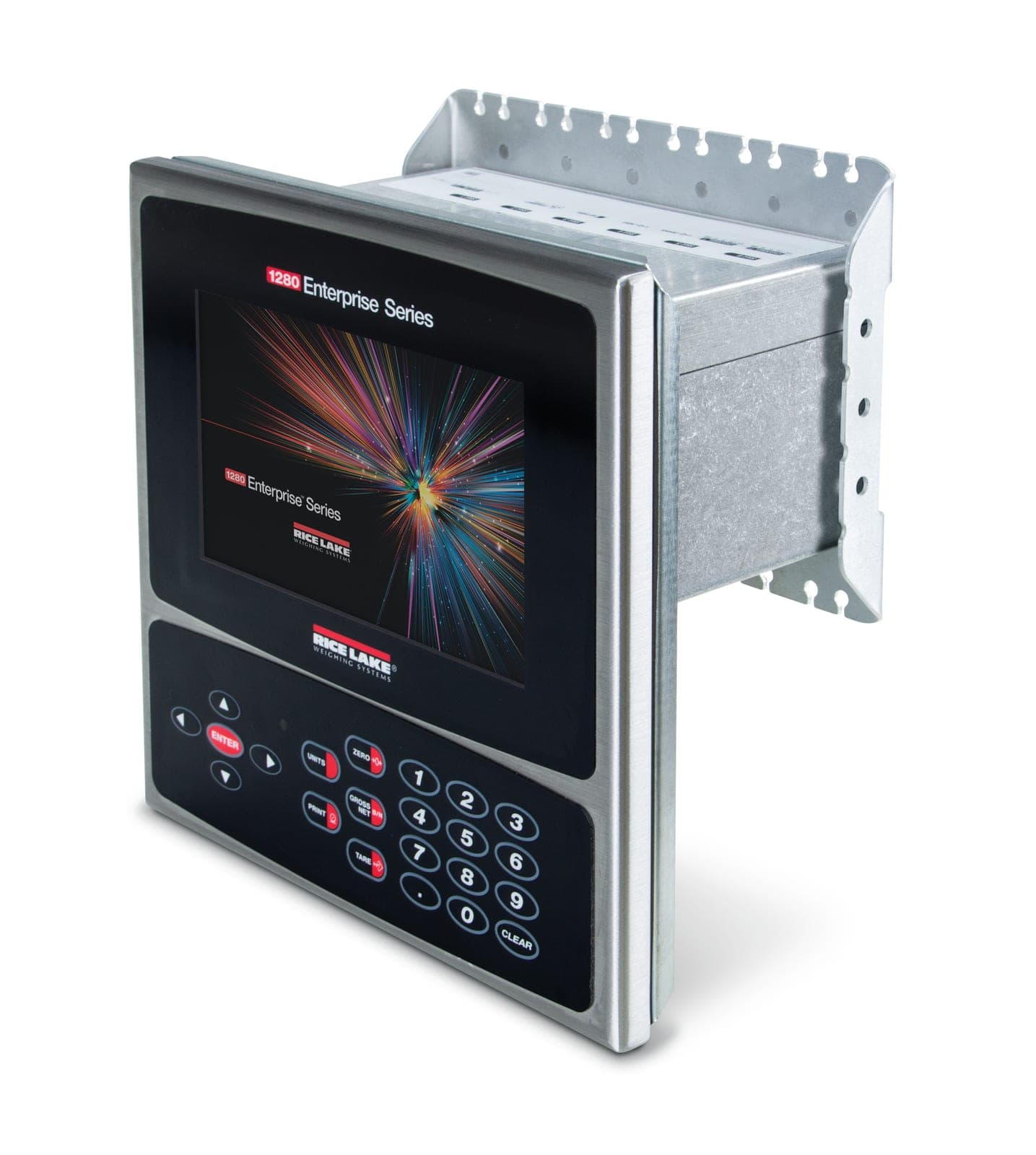
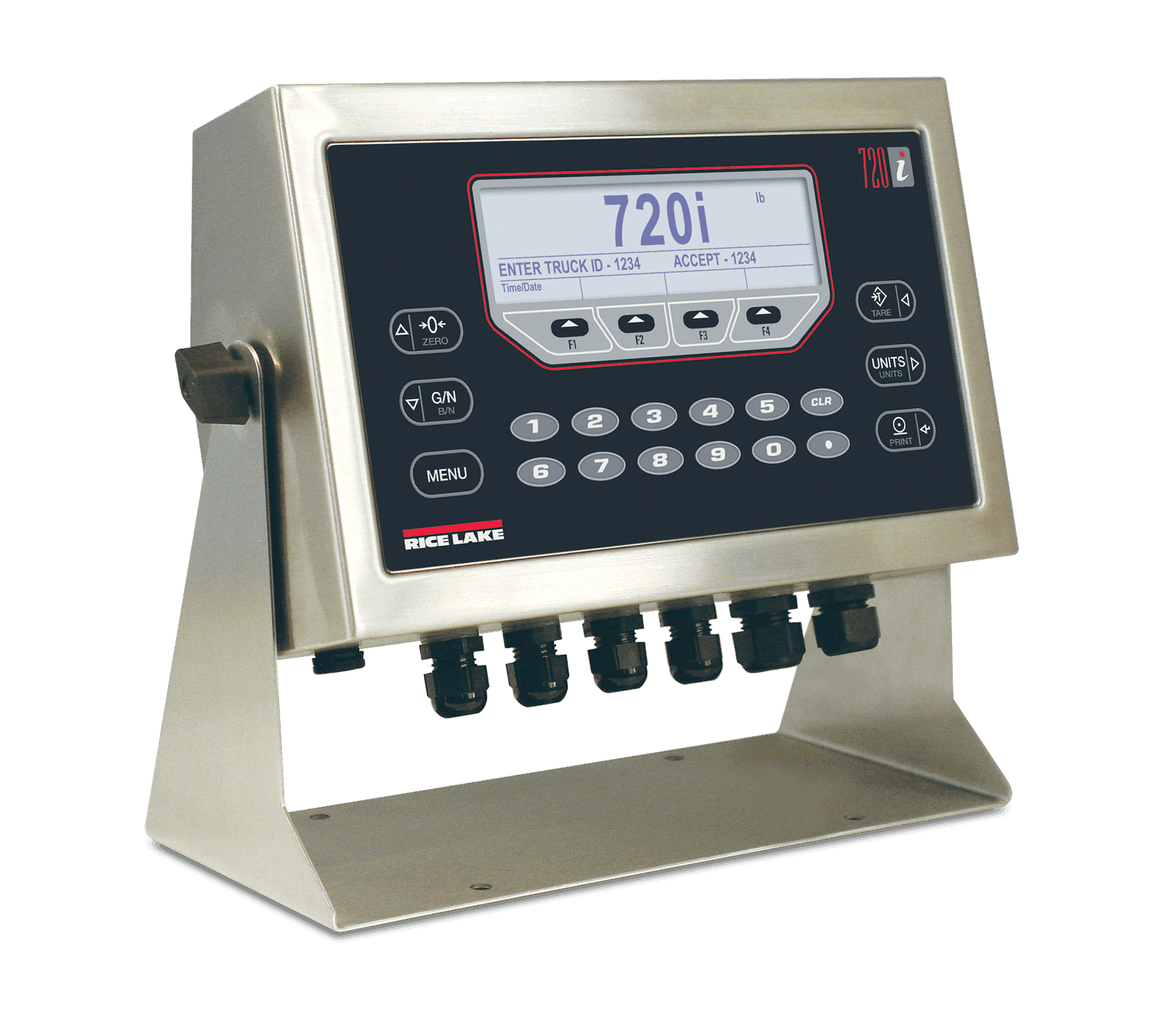
The indicator is the head of the scale — it reads the load cells, displays the weight, and talks to whatever comes next. We stock and service indicators from basic digital readouts to full touchscreen units.
The choice comes down to what the scale has to do. A rugged washdown readout you can see across the plant floor covers most general weighing. Add setpoints and digital outputs when the indicator has to drive something. Step up to a networked touchscreen when it has to feed your control system, hold a truck database, or print a ticket. We will tell you which one the job actually needs, and we will not sell you the rest.
- Basic readout — washdown enclosure, readable across the plant floor
- Setpoint models — digital outputs to drive gates, valves, and feeders
- Networked touchscreen — truck databases, ticketing, and plant protocols
- Legal-for-trade and stainless washdown enclosures where the site needs them
A scale by itself just shows a number. A weighing system connects that number to the rest of your business.
Programmable Controllers
When the scale needs to run the process — not just report on it — you need a programmable controller: multiple scale channels, configurable setpoints, and digital I/O that can run filling, dosing, and multi-ingredient batching on its own. Where an operator needs to drive it, the same programs sit behind a touchscreen.
Programmable Indicators can be used to configure batching logic and set up I/O to drive moving components to create systems for ingredient batching in feed mills, net-weight filling lines, checkweighing with reject control, and accumulation on conveyor belt scales.
- Multiple scale channels, configurable setpoints, and digital I/O
- Touchscreen operator interface where someone has to drive it
- Batching, filling, dosing, and checkweighing applications
- We design, build, and support the system — and can head up the project
System Integration
Most plants don't need a new scale. They need the scale they have to talk to the rest of the operation. That's integration, and it's a core part of our business.
We can connect scales to PLCs so weight becomes a live input to your control system, and get weighments into databases and ERP systems so nobody retypes a number. We do that alongside your IT and PLC team, or with 3rd party specialists. We set up truck scale ticketing — inbound/outbound weights, tare storage, printed or emailed tickets — for quarries, recyclers, ag operations, and transfer stations. And we install remote displays and scoreboards so drivers and operators can see the weight from the cab or across the yard. When we know what you are trying to accomplish, we can generate a Budget Quote for your ROI based on a description of your project. When the time comes, we can come on-site to look at your specific equipment, network, and processes, and provide you with a specific recommendation and a detailed quote.
- Scale-to-PLC connections for live process control
- Weight data into databases, spreadsheets, and ERP systems
- Truck scale ticketing systems with tare storage and reporting
- Remote displays and scoreboards for drivers and operators
Data and Communications
Getting weight out of the indicator and into your system depends on speaking the right protocol. We work with the industrial standards daily: EtherNet/IP, Modbus, PROFINET, and DeviceNet for PLC communication; RS-232/485, USB, and Ethernet TCP/IP for serial and network connections; and 4-20 mA or 0-10 V analog outputs when a simple signal is all the process needs.
When off-the-shelf software doesn't fit, we can work with your IT team or 3rd party specialists on custom interfaces — data collection utilities, label and ticket formats, and reporting tools shaped to how your plant actually runs. We'll also tell you when you don't need custom work, because most jobs are solved with the options already built into a modern indicator.
- EtherNet/IP, Modbus, PROFINET, DeviceNet fieldbus options
- RS-232/485, USB, and Ethernet TCP/IP connectivity
- 4-20 mA and 0-10 V analog outputs
- Custom data collection and ticketing software, with your IT team or specialists
Common questions
Can you connect my scale to a PLC?
Yes. We can connect indicators to PLCs over EtherNet/IP, Modbus, PROFINET, DeviceNet, and analog outputs. Most modern indicators take a fieldbus option card, so your existing scale can often be connected without replacing it. We handle the weighing side and work with your PLC team or 3rd party specialists on the rest — or we can head up the project.
What's the difference between a weight indicator and a weight controller?
An indicator reads the load cells and displays the weight. A controller does that and also runs logic — setpoints, digital I/O, and programs that open valves, start feeders, or stop a fill at target weight. If the scale needs to drive the process, you need a controller.
Do you set up truck scale ticketing systems?
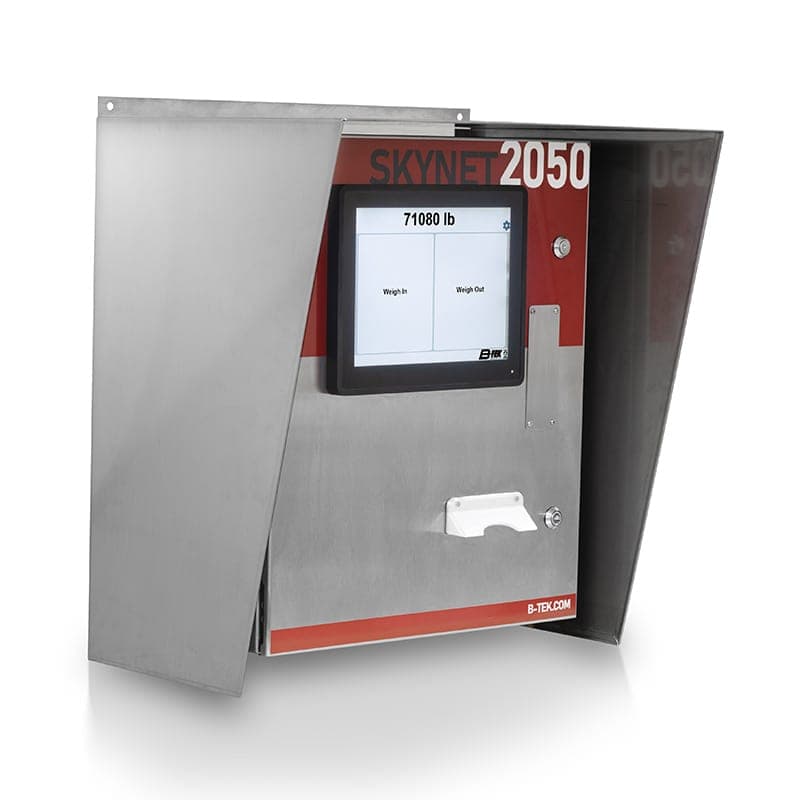
Yes. We install and configure ticketing for truck scales: inbound/outbound weighing, stored tares, customer and material databases, and printed or electronic tickets. Some indicators have truck ID storage built in, and we add ticketing software when you need reporting or billing integration.
Can weight data go straight into my database or ERP system?
In most cases, yes. Indicators can stream or log weighments over Ethernet or serial connections, and we work with your IT team or 3rd party specialists to get that data into your database, spreadsheet, or ERP without manual entry. We'll look at what software you run and quote the simplest path that works.