FOOD & WASHDOWN
Food and Washdown Scales
Scales that survive nightly washdown, and that sanitation can clean to every corner.
Food environments are hard on scales. Nightly washdown, caustic cleaners, salt, blood, and brine will kill standard equipment in months, and a scale that cannot be cleaned to the corner becomes a sanitation problem of its own.
The right answer depends on your plant. How you wash and what you wash with, whether the weight is sold to a customer or logged for quality, and whether product stops to be weighed all change the specification. We design around the job rather than forcing the job around the scale.
We supply washdown-rated equipment from Rice Lake, Doran, Detecto, Cardinal, Ohaus, and CAS — and service almost any make.
Sanitary Design and Washdown Ratings
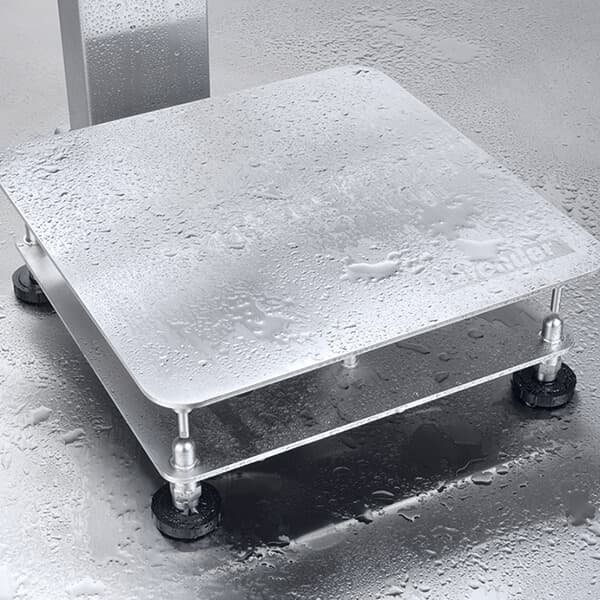
The rating tells you what the scale survives. IP66 covers heavy hose-down. IP69K covers close-range, high-temperature spray — what a sanitation crew with a foamer and a hot-water wand delivers every night. Cleaners are the other half of the problem: sealed load cells and gasketed enclosures matter as much as the stainless shell.
In a USDA or FDA inspected plant, the scale is judged like anything else on the floor: can it be cleaned, and can you prove it? Hollow tubes, exposed threads, and flat ledges collect water and residue. If sanitation cannot get a hose and a swab into every corner, your auditor will notice before you do.
- IP66 for hose-down; IP69K for hot, high-pressure spray
- 304 stainless, continuous welds, no hollow tubes or exposed threads
- Sealed load cells and gasketed indicators, not just stainless covers
- Lift-top and open frames for full interior cleaning and inspection
- Cleaning chemistry, not just water, drives the specification
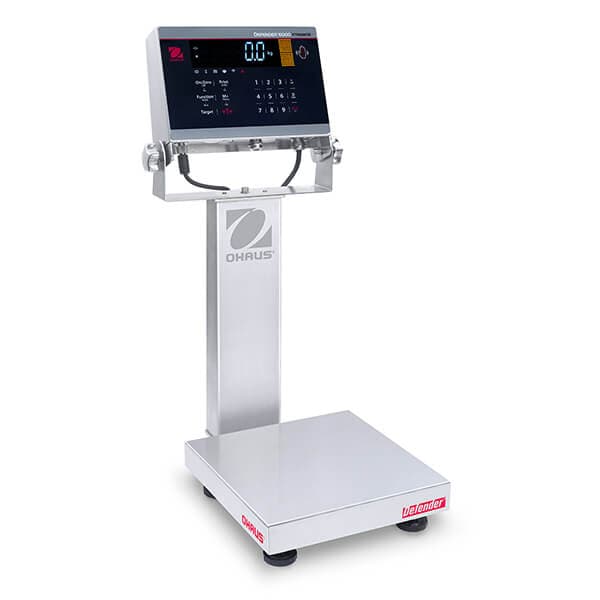
Built Around the Job
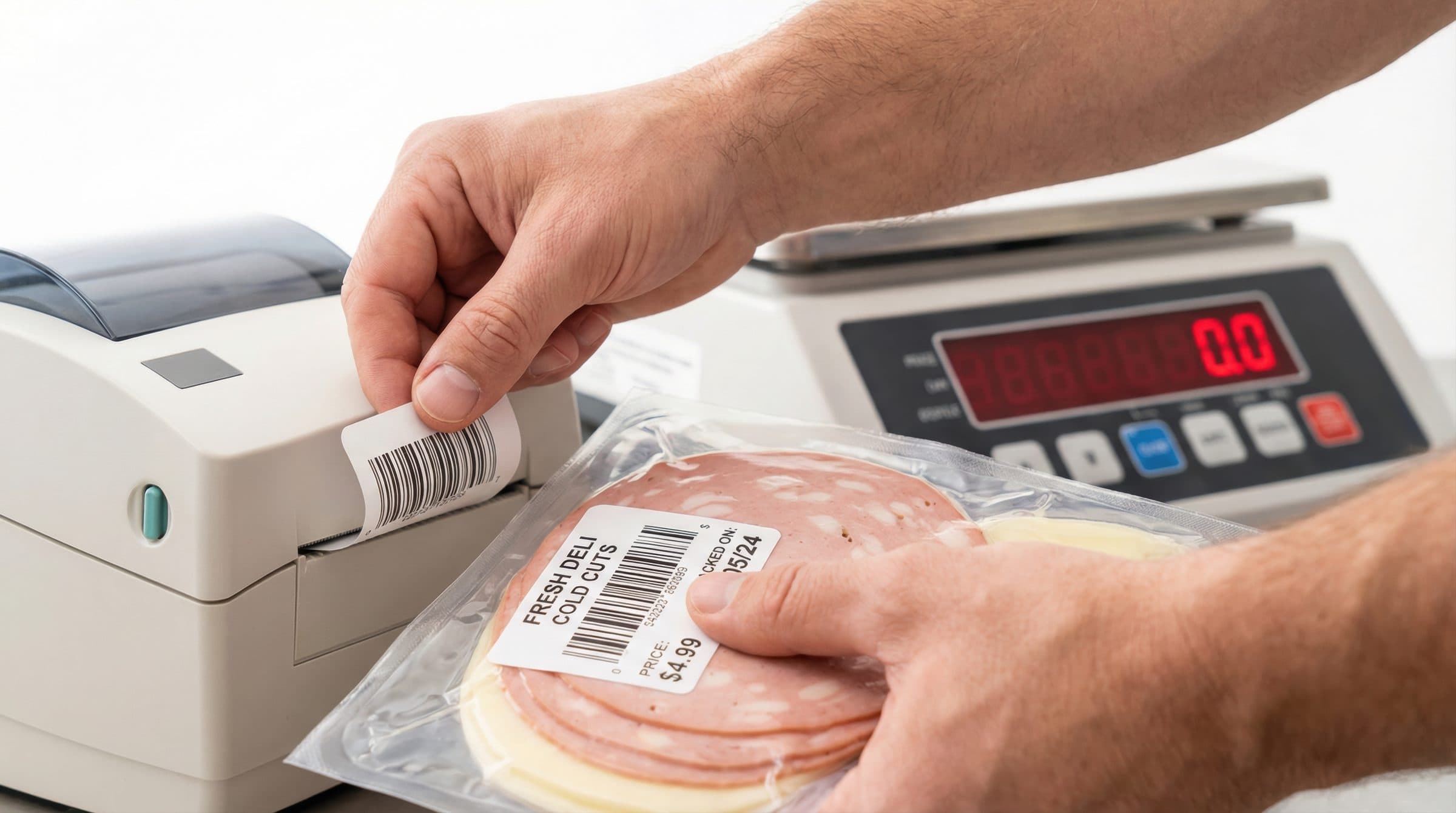
The specification starts with where the scale lives and what it has to prove. A counter selling by weight needs NTEP legal-for-trade equipment and, usually, label printing with barcodes and expiration dates. A processing line needs capacity, platform size, and a wash regime the scale can survive.
When product is moving, weighing by hand becomes the bottleneck. In-motion checkweighers verify every package against a target range as it passes, reject what misses, and log the result. Washdown builds handle wet lines. We size the equipment, integrate it with your line, and keep it calibrated.
- NTEP legal-for-trade where you sell by weight
- Label printing, barcodes, and PLU management at the counter
- In-motion checkweighing with automatic reject instead of sampling
- Legal-for-trade in-motion models feed weigh-price labelers
- Placing-in-service paperwork, routine testing, and scheduled calibration
Common questions
What is the difference between IP66 and IP69K on a washdown scale?
IP66 means the scale is sealed against powerful water jets from any direction. IP69K is a tougher test: close-range, high-pressure spray at high temperature, which matches what a sanitation crew actually does every night. If your plant uses hot high-pressure washdown or caustic foam cleaners, buy IP69K. If the scale just gets hosed off, IP66 is usually enough.
Do I need an NSF or USDA-accepted scale for my food plant?
If you are in a USDA or FDA inspected facility, your equipment has to meet sanitary design expectations: cleanable, inspectable, no harborage points. Scales built to hygienic design standards, like stainless lift-top floor scales and continuous-weld bench scales, hold up to that scrutiny. Tell us what your inspector or auditor requires and we will match the equipment to it.
How often should food processing scales be calibrated?
Most food plants calibrate quarterly to annually depending on their quality system, customer requirements, and how hard the scales are used. Legal-for-trade scales used for selling by weight also face state inspection. We issue the calibration certificates your HACCP, SQF, or BRCGS program needs, and we can set up a Periodic Maintenance Agreement for your scales.
Can a regular scale survive washdown if we cover it?
No. Bagging or covering a standard scale is a stopgap that fails fast. Moisture gets past the cover, corrodes the load cell, and kills the electronics, and the cover itself becomes a sanitation problem. A purpose-built washdown scale costs more up front and far less over its life. We have replaced enough drowned scales to say that with confidence.